
What makes this kind of scaffold easier to work with
Access that suits live building work
We plan scaffold around the way your extension is being built. That helps your trades move safely and keeps disruption more manageable.
Smaller footprint where space is tight
Low towers are useful when access is needed without taking over the whole site. You get practical working height without wasting space.
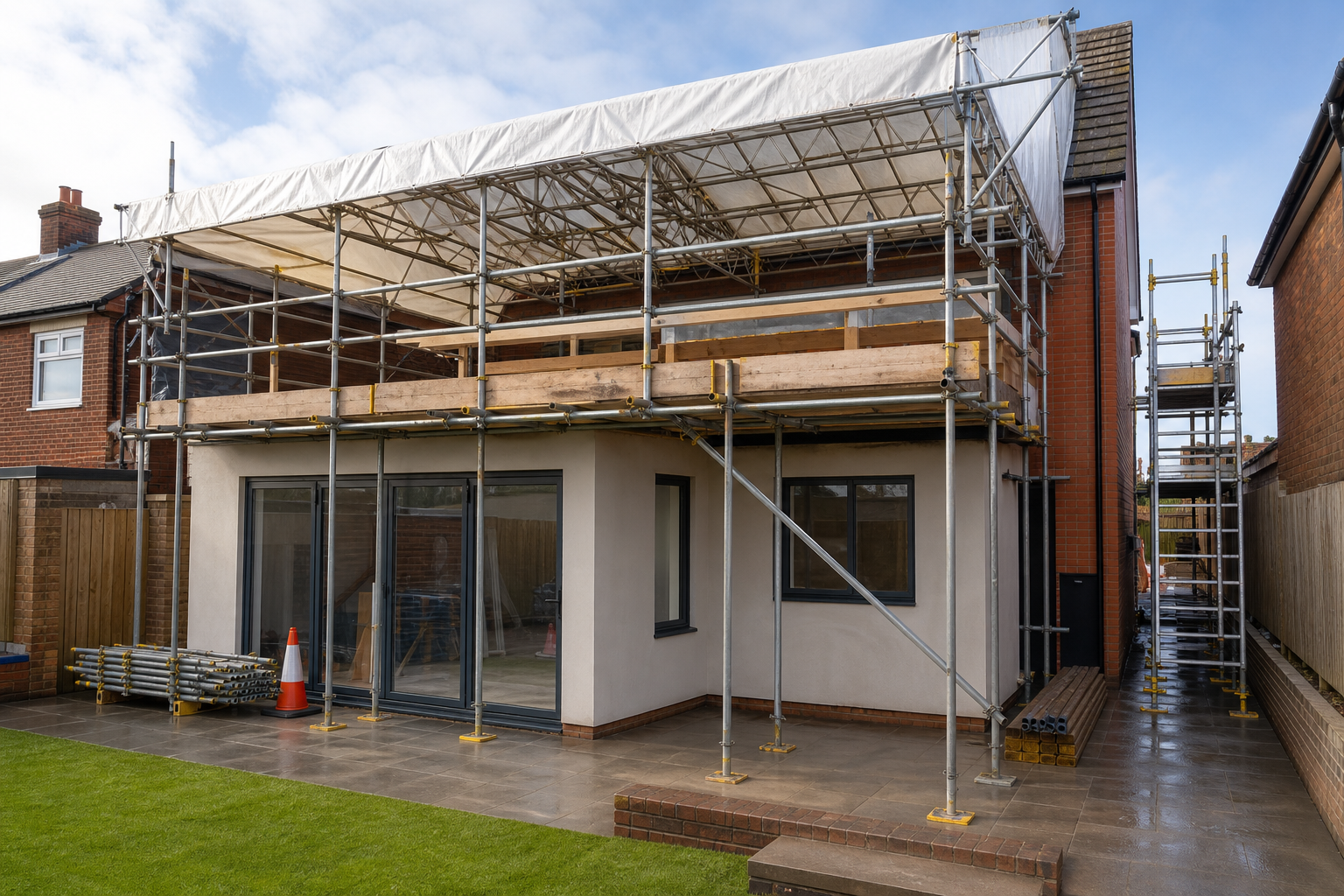
Temporary roofs for exposed stages
We can add overhead protection when parts of the build are open to the weather. That helps work continue with fewer hold-ups during refurbishment or extension jobs.
Safe access for extension work that keeps your project moving
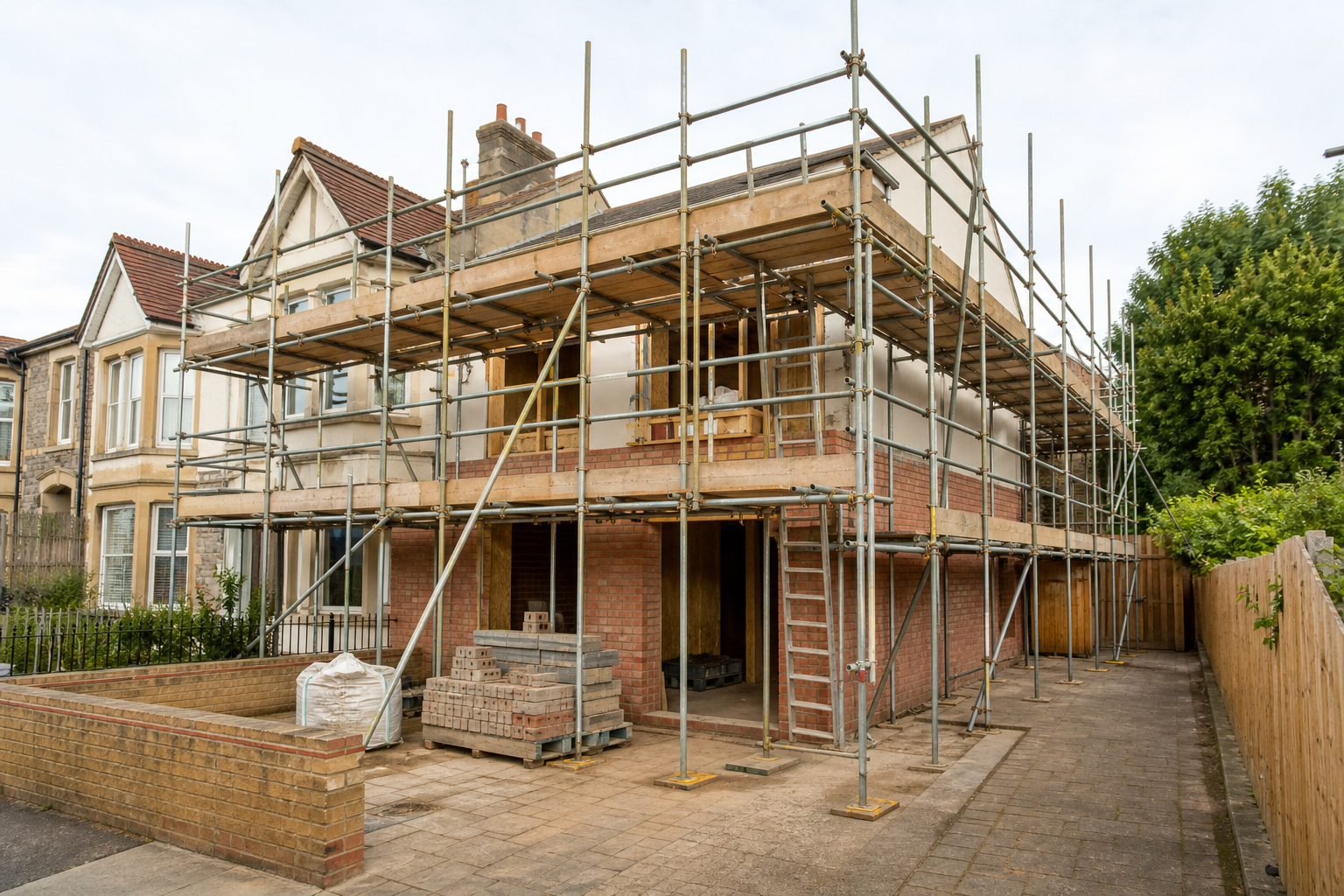
Extension work gets a lot easier when your scaffold is planned around how the job will actually run. We set up practical access with Lala Scaffolding for house builds, refurbishments, and alteration work, giving you a safe platform for trades to get on with the job. Front and back domestic scaffolds can help keep movement around your property more manageable while work carries on.
That matters when materials are arriving, walls are going up, and different trades need room to work without getting under each other's feet. We can also adapt the layout to suit tighter plots where space is limited and every access point counts. If you're improving a home or expanding business premises in Bristol, we make sure the scaffold supports the build instead of slowing it down.
Set-ups that match the scale and shape of the job
Our smaller access options work well when a full wraparound structure would be overkill. Low tower scaffolding and tower scaffolding give you a neat solution for short access runs, upper-level repairs, and refurbishment areas with a smaller footprint.
We can also install temporary roofs through Lala Scaffolding when extension or refurbishment work needs protection from the weather. That extra cover helps keep the working area usable during exposed stages of the build. From domestic projects to wider commercial access, we plan each scaffold around the work in front of you.
Frequently asked questions
What type of scaffold is best for a house extension?
That depends on the size of the build, the height involved, and how much access your trades need. For many domestic projects, front and back scaffolds work well, while tighter areas may suit a low tower or tower scaffold.
Can you keep access around the property available during the work?
Yes, that's often part of the plan for extension scaffolding. We can set up front and back access so the scaffold supports the build while still allowing more practical movement around the property.
Do I need a temporary roof for extension or refurbishment work?
A temporary roof can be useful when the structure will be exposed during the job. It helps protect the working area from the weather and can reduce delays during key stages of the build.